






Tory Burch Prices in 2026: What Each Rung Costs Today
Pricing here is best read as a ladder with three rungs rather than as a single average. One band starts under $100, a second holds most of the catalogue, and a third tops out well below European leather-goods pricing. More is explained by the rung a category occupies than by any one price. Each band is described below, real products are named at observed figures, and the ladder is then divided category by category. The numbers here were collected on the brand’s own US site in September 2026. These are observed market prices, not an official price list; the brand publishes no fixed pricing, and figures move by season, market, material and channel.
How these figures should be read
Three cautions matter before any number is useful. An observed price says nothing about next season, since colourways inside a single name can carry different prices. Names tend to span ranges rather than points: one sandal was observed at the same figure in printed, patent and suede. Treat the edges as descriptive, because the bands blur into each other and some styles sit between them at around $225. None of these figures is a discount benchmark, since promotional pricing is separate and seasonal. The ladder reliably shows the shape of the range, and that shape stays stable.
Entry band: about $95 to $200
This is where the brand recruits, and it is deeper than most people expect. Small leather goods anchor the bottom, with a Romy flat card case observed near $95. The band also holds swim separates: around $95 for a bikini bottom, near $110 for a top, near $140 for terry logo separates. Footwear enters through moulded rubber, with a mini Miller jelly near $125 and a Miller Cloud Light about $150. Wallets and belt bags populate the top half of the band, including a T Monogram coated jacquard envelope small wallet near $190. The telling number is the ceiling, because the leather Miller sandal was observed around $200, which places the brand’s most tory burch recognisable object at the foot of its leather ladder.
The core band: roughly $250 to $600
Most of what buyers actually weigh up falls inside this band. Across footwear that includes sneakers around $250, most sandals between roughly $250 and $400, loafers near $325 and ankle boots about $475 to $500. The relaunched Reva family sits here as well, its punk travel ballet styles between roughly $275 and $325, a step up from the $195 the original carried before the 2017 pause. Bags in the band run from an Ella twist reversible tote near $260 up to a Fleming crossbody around $470. For tory burch clothing that works out as denim at roughly $350 to $395 and a printed viscose jersey dress about $550. At around $600 a turnlock riding boot and a Miller crystal kitten heel mark its ceiling.
The observed top band: around $695 to $995
Most shoppers overestimate this ceiling, and where it actually sits is the defining fact about the label’s position. The band starts on tall boots, a Charlie tall boot around $695 and a multi buckle boot near $750. The Lee Radziwill styles crown the bags, with a small double bag and a bucket bag alike near $795. Below that pair sit a Fleming carryall near $695 and an Eleanor suede satchel about $750. Outerwear supplies the rest, including a corduroy blazer and a denim shirt jacket around $750 each. In the September 2026 reading the highest figure was a double breasted wool coat near $995, with nothing approaching a five-figure tier.
The three bands, set side by side
Seen together, the bands describe a range that bulges through the middle before ending soon at the top. Reach is the entry band’s purpose, and small goods, swim and moulded footwear make up most of it. The top band stays narrow and is populated mainly by outerwear, tall boots and one bag family. The core band, by contrast, holds the leather, the knitwear, the denim and most of the bag catalogue. The numbers in the table are observed market prices, read in September 2026. Take the middle row as normal and the rows either side of it as exceptions.
| Band | Observed range | What the band holds | Named pieces at observed figures |
|---|---|---|---|
| Entry | About $95 to $200 | Cosmetic cases, card cases, hair clips, swim separates, jelly sandals, cotton tanks | Romy Flat Card Case about $95; Miller Jelly about $150; Miller Sandal about $200 |
| Core | About $250 to $600 | Sneakers, most sandals, ankle boots, loafers, knitwear, denim, most leather bags | Perry Tote at around $395; Fleming Crossbody at around $470; Printed Viscose Jersey Dress at around $550 |
| Observed top rung | About $695 to $995 | Tall boots, tailored outerwear, the Lee Radziwill bags, occasion pieces | Charlie Tall Boot at around $695; Small Lee Radziwill Double Bag at around $795; Double Breasted Wool Coat at around $995 |
Taking the categories one by one
The bands describe the whole range, but each category occupies a different slice. No category is wider than footwear, and none other covers all three bands in one season. With no exotic-skin tier to stretch into, bags start higher than footwear and end lower. Ready-to-wear reverses that pattern: it enters near the top of the entry band and sits mostly above $400. Swim, sport and fragrance each cluster tightly rather than spreading. That order is the one the three sections below follow.
Shoes and small leather goods
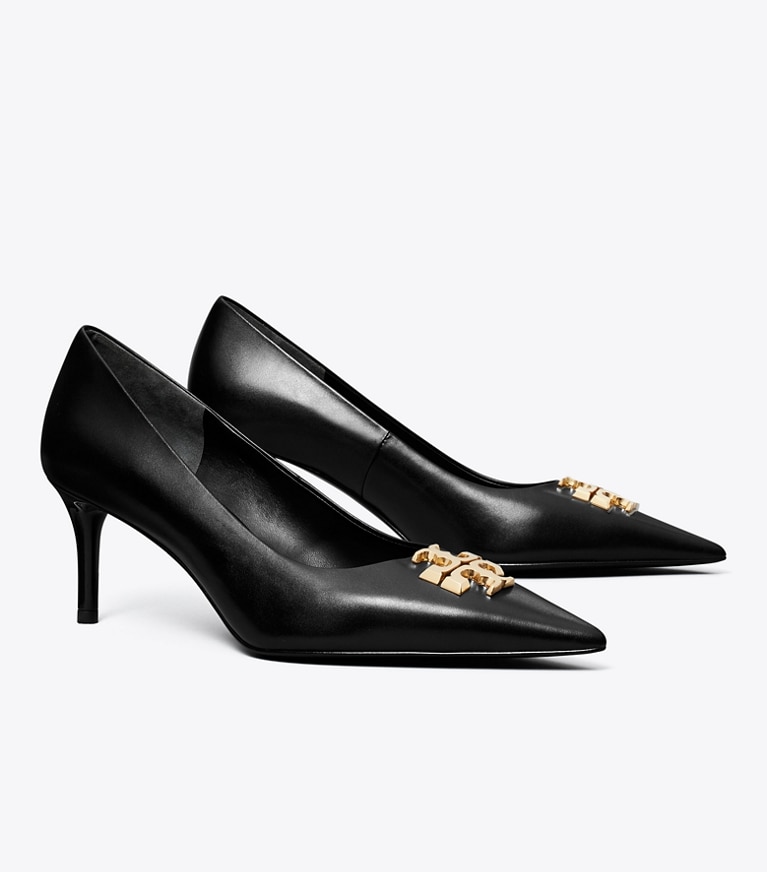
Tory burch shoes are the clearest expression of the ladder, because one silhouette appears at several rungs. The Miller family alone ran from about $125 for a mini jelly to around $200 for the leather sandal. Higher rungs come next at roughly $250 for Capri versions, about $300 for knotted styles and near $600 for a crystal kitten heel. Sneakers hold $250 to $300 and loafers about $325 to $375, with sandals and espadrilles clustered between $250 and $375. The steepest stretch belongs to boots: around $395 for a Romy Chelsea boot up to about $625 for a money clip boot. Small leather goods move in step, from near $95 for a card case to about $310 for a mini belt bag.
Bags
Bags start around $260 for nylon and climb to about $795 at the top of the leather range. Between roughly $260 and $295 the nylon Ella styles hold the floor. Next in line are suede and croc-embossed Romy styles, about $295 to $595. The middle is quilted leather, where Perry totes sit near $395, small Charlie shoulder bags about $450 and a Fleming crossbody around $470. Above that sit east-west satchels near $595 and an Eleanor suede satchel around $750. The Lee Radziwill family crowns the category near $795, and nothing sits above it in the observed range.
Ready-to-wear, swim, sport and fragrance
Ready-to-wear opens around $150 for cotton tanks before jumping to about $330 for a racerback tank and $350 to $395 for denim. The knitwear span is roughly $420 for a merino turtleneck through to about $550 for a T Monogram jacquard cardigan. Skirts run from around $440 to $795, and dresses from about $550 to $795. Swim is the most affordable category, near $95 for a bikini bottom rising to about $250 for a balconette swimsuit. Now a section of the brand’s own site rather than a standalone label, Tory Sport runs from about $95 to around $440. Fragrance sits lowest, with travel sprays at roughly $35 to $40 and full bottles between about $108 and $250.
Discounts, outlets and the tory burch sale question
Real markdowns exist, but much of the online writing about them does not. A recurring Semi-Annual Sale is run by the brand, and coverage of a July 2026 event described sandals under $100 with reductions up to around half off. Depths of 50 to 70 per cent get quoted, and the top of that range is promotional language, not a guarantee. A separate Private Sale is reported to be account gated on a cadence nobody has confirmed, so look for discounting around early summer and year-end. Physical outlet stores exist, mostly in premium outlet centres, but there is no online outlet — the brand states plainly it operates none. Expansion is the story at Nordstrom Rack and the TJX chains, which carry the label and are growing in 2026, while the Saks OFF 5TH online store shut down entirely following Saks Global’s early-2026 bankruptcy.
Reading the brand’s position off the ladder
A range that ends near $995 is saying something deliberate about where it sits. Founded in February 2004 and still independently held, it is American accessible luxury run out of New York. Distribution runs through around 400 of its own stores — boilerplate carried for several years — plus 3,000-plus department and specialty doors. Comparing its pricing to European leather-goods houses is not useful unless you say so, because those houses run tiers this brand lacks. Financials are not published, so any revenue total is an estimate, and the $3.3 billion figure people quote comes from a December 2012 transaction, not from a current valuation. Governance deserves a line too, because the founder serves as Executive Chairman and Chief Creative Officer and not as chief executive, with Pierre-Yves Roussel CEO since 2019.